Inman meets a woman and learns her daughter had recently passed away. He helps the woman burry her daughter and then as a way of thanking him the woman cooks him a meal. He looks at a picture the woman has. The picture is composed by a huge family, and then Inman learns the woman is the only survivor. Inman continues his journey and spends the night at an abandoned chicken house. When he wakes up he reads his book and the continues his journey. He then find three skeletons hanging from the branch of a tree. Imnan walks along a ridge of a mountain. He set up a camp to spend the night, but he is awakened by a bear and her cub. He doesnt want to shoot the bear so he puts the gun aside and tries to calm the mother. But its in vain soInman hides, then the bear jumps below on some rocks. Inman seems obligated to shoot the cub and eat it because he is hungry. He regrets killing the bear because he made a promise of never killing bears. As a result Inman creates an eighth sin, "Regret".
1b. Author's Style: In this chapter the author uses symbolism, imagery, and metaphor.
Symbolism: "The sun was not up good yet and she was about to have to bury her child wound up in an old quilt, for she had no idea of how to make a box. Inman found himself viewing a trio of hanging skeletons swaying in the breeze and tapping into each other. He picked up the LeMat's and shot the cub in the head and watched it pause as its grip on the tree failed and it fell to ground." These three statements from the reading symbolize that death spreads through Inman's world.

Metaphor: "A single cub not much bigger than a man's head climbed a little way up the trunk of a young Fraser fir behind her." In this metaphor the author compares the little bear to a man's head, so the reader would have an idea of how big the cub was.

Imagery: "The wind sweeping up the mountain carried away the smell of the bear boiling and left only the odor of wet stone" This imagery enables the reader to visualize how the smell of the boiled meat of the bear was being draged away by the wind and left a scent of humid rock.
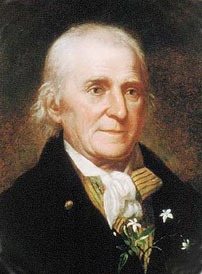
1c. Historical Context: “A picture of the land Bartram detailed leapt dimensional into Inman's mind.” This statement matches the drawings and description Bartram used to make of his landscapes, it also matches the reason why he was well known. According to my source from his mid-teens, Bartram was noted for the quality of his botanic and ornithological drawings.
2a. Inman experiences a difficult but moral situation when he murders the baby bear. Something inside of him dies when the bear dies. This shows that even though he is about to reach what he has longed for four years, he will never be able to forget what he has done.
2b. The woman's whose daughter passed away has an impact on Inman. She pretty much leaves on Inman that same feeling Sara left. A feeling of pity, depression, and tragedy. The fact that out of her entire family, the woman is the only survivor, makes Inman feel identified, because out of all his friend from war, he was the only one left alive.
3b.


No comments:
Post a Comment